3×
Projected growth in Asia-Pacific air travel within 20 years
CAAS, 2025
Established July 2025 · Singapore · Regional mandate
A Singapore centre with a regional mandate. APSAC works with governments, industry, and academia — through policy research, collaboration, and capacity building — to help Asia-Pacific states meet their aviation decarbonisation commitments.
Founded by
Civil Aviation Authority of Singapore
Founding CEO
Philip Goh, former Regional VP, Asia-Pacific, IATA
Chaired by
Han Kok Juan, Director-General, CAAS
Advisory Council
Airbus · Boeing · Chevron · ExxonMobil · GenZero · IATA · Neste
The challenge
3×
Projected growth in Asia-Pacific air travel within 20 years
CAAS, 2025
2050
ICAO Long-term Aspirational Goal: net-zero international aviation emissions
ICAO LTAG
1 → 5%
Singapore SAF target trajectory from 2027 to 2030
CAAS, 2026
Every long-haul flight out of Singapore, Jakarta, Bangkok or Sydney compounds the question: how does the world's fastest-growing aviation region decarbonise without clipping its own wings? That question is APSAC's reason to exist.
About the Centre
Established in July 2025 by the Civil Aviation Authority of Singapore, APSAC exists to help Asia-Pacific states balance aviation growth with their climate commitments — through policy research, inter-organisational collaboration, and capacity building.
The Centre is led by founding CEO Mr Philip Goh and chaired by Mr Han Kok Juan, Director-General of CAAS. It draws authority from an Advisory Council that spans aircraft manufacturers, energy majors, the global airline industry body, and green finance.
Three pillars
01
Evidence for the region's hardest aviation decisions.
02
Joint studies and projects across government, industry and academia.
03
Technical assistance and training in sustainable aviation policy.
Year-one priorities
Leadership
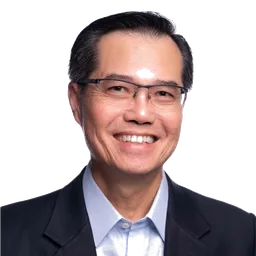
Founding CEO, APSAC
A 37-year aviation veteran — 34 years at Singapore Airlines (rising to Regional Vice President across West Asia & Africa, Southeast Asia, and the Southwest Pacific) and three years at IATA as its Regional Vice President for Asia-Pacific. As APSAC's founding CEO, Philip leads the Centre's research agenda, Advisory Council engagement, and capacity-building programmes.

Board Chair · Director-General, CAAS
As Director-General of the Civil Aviation Authority of Singapore, Han Kok Juan leads the regulator that set APSAC up and authored the Singapore Sustainable Air Hub Blueprint that APSAC's work now regionalises.
Advisory Council
APSAC's Advisory Council brings manufacturers, fuel producers, the airline industry's global body, and a Temasek-backed decarbonisation investor into one room — the coalition required to move SAF, carbon markets, and green aviation finance at the scale the region needs.

Airbus
Aircraft OEM

Boeing
Aircraft OEM

Chevron
Energy

ExxonMobil
Energy

GenZero
Green financing · Temasek

IATA
Airline industry association

Neste
SAF producer
Flagship programme
APSAC's foundational capacity-building course, co-developed with the Singapore Aviation Academy.
In person, in Singapore
A multi-day programme that convenes Asia-Pacific policy-makers for lectures, site visits, and working sessions — with speakers drawn from Singapore Airlines, Changi Airport Group, and APSAC's Advisory Council.
A community, not a classroom
The course's deliberate by-product is a standing community of regional sustainable-aviation policy-makers. That network is how technical assistance, benchmarking, and shared trials actually move.
Milestones
APSAC sits inside a longer Singapore decarbonisation arc that began with the Sustainable Air Hub Blueprint and points at ICAO's 2050 goal.
2023-11
29th ASEAN Transport Ministers Meeting adopts the 10-year ASAAP, shaped under Singapore's 2022–2023 chairmanship of the ASEAN Air Transport Working Group.
2024-02
Launched at the Changi Aviation Summit; submitted to ICAO as Singapore's State Action Plan for decarbonising aviation.
2025-07
Asia Pacific Sustainable Aviation Centre established by CAAS at the Global Aviation and Maritime Symposium; Roundtable on Advancing Sustainable Aviation held 14 July 2025.
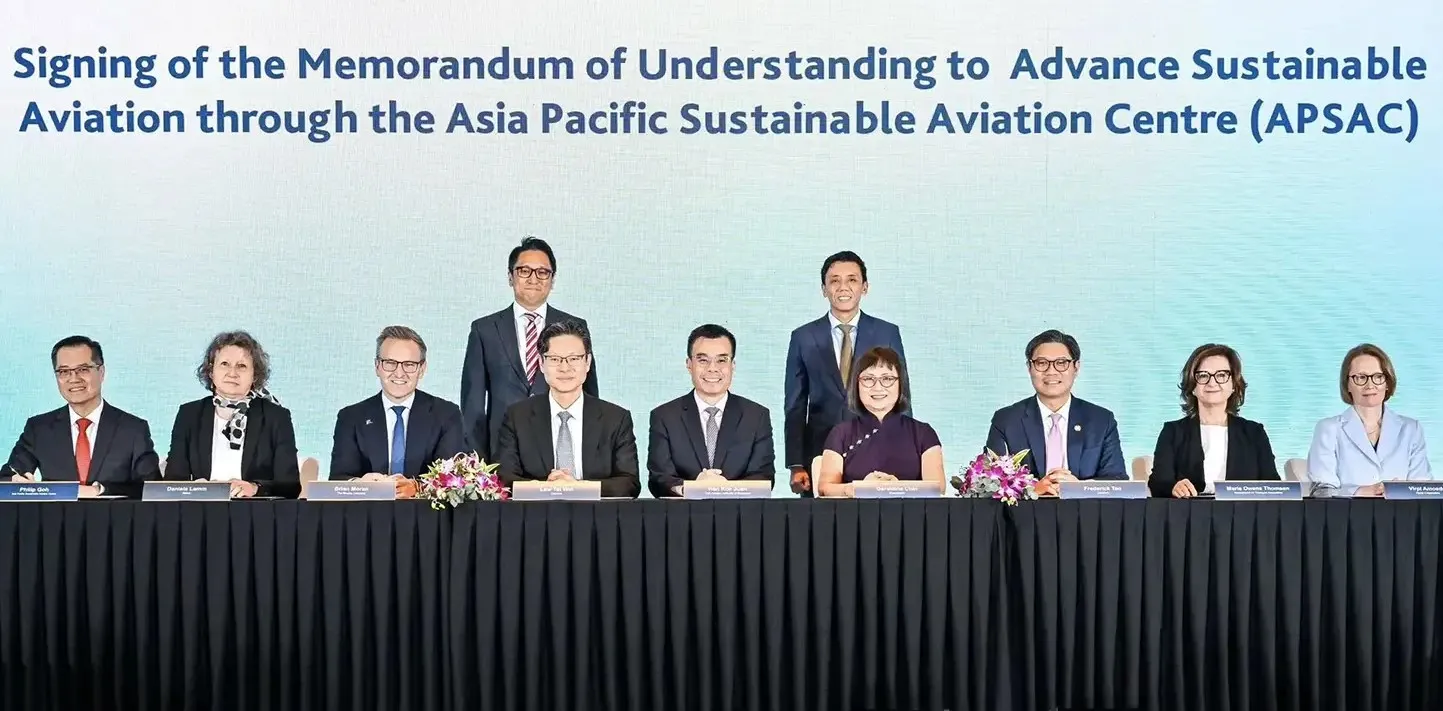
2026-02
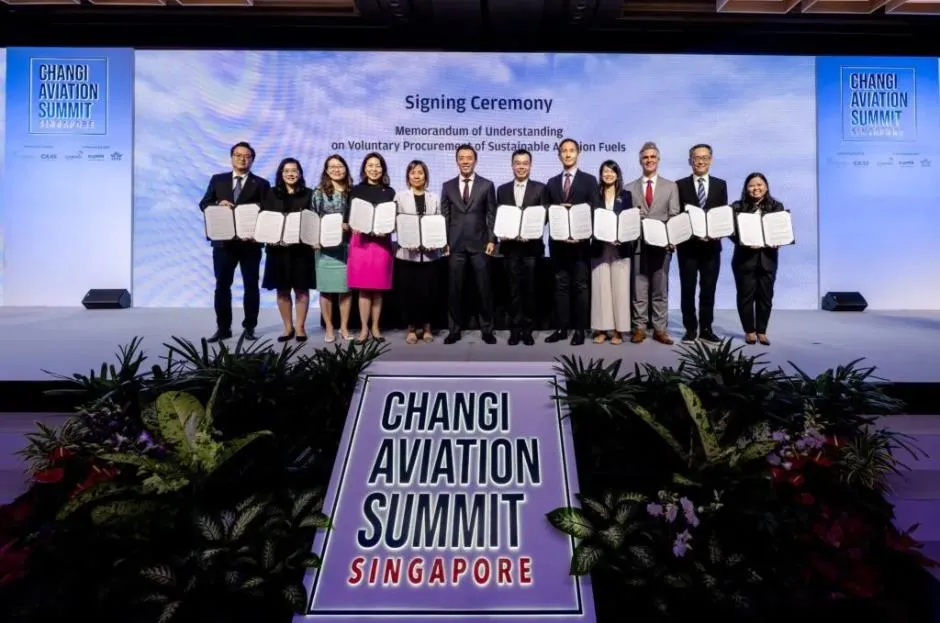
At the 3rd Changi Aviation Summit, CAAS, SAFCo, BCG, Changi Airport Group, DBS Bank, GenZero, Google, OCBC, Temasek, Singapore Airlines and Scoot sign an MOU to launch Singapore's first trial for central procurement of SAF.
2027
SAF Levy collection begins 1 January 2027 (applicable to tickets sold from 1 October 2026), funding procurement through a statutory SAF Fund managed by CAAS.
2030
Subject to global developments and wider availability of SAF.
2050
ICAO's Long-term Aspirational Goal, to which the Asia-Pacific region has committed.
Ecosystem
From ICAO's 2050 goal down to a litre of SAF uplifted at Changi, the decarbonisation stack has many tiers. Each has a specific job to do.
Read the ecosystem briefPartner · collaborate · support
This is a design-concept site — but enquiries are welcome, and we'll point you toward the real Centre where appropriate.
Ways to engage